

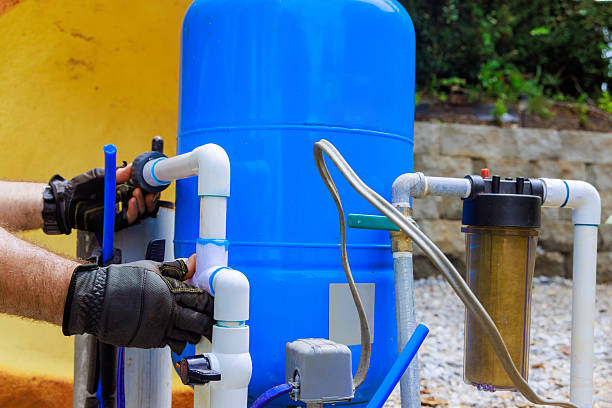
When people look into improving the quality of water in a property, they often encounter a wide range of filtration technologies. One of these is the membrane water filter, a type of filtration that uses a specially designed membrane to separate water from certain unwanted substances.
Membrane filtration can be useful in domestic, mobile and independent water applications, but understanding how it works is important before deciding whether it is appropriate. Different membranes have different characteristics, so the term does not describe one identical type of system.
What Is a Membrane Water Filter?
A membrane filter uses a semi-permeable barrier through which water is passed under controlled conditions. The membrane contains extremely small openings or has selective properties that determine which substances can pass through and which are retained.
Unlike a simple sediment filter, which is primarily designed to capture physical particles, membrane technology can provide a more selective filtration process. The exact substances retained depend on the membrane type, system design and operating conditions.
Several types of membrane filtration are used in water treatment, including microfiltration, ultrafiltration, nanofiltration and reverse osmosis. These technologies operate at different levels of filtration and are designed for different applications.
Consequently, choosing a membrane system should begin with understanding the water that needs to be treated.
How Does Membrane Filtration Work?
Although membrane systems can vary considerably, the basic principle involves moving water across or through a membrane.
In pressure-driven systems, water is pushed towards the membrane. Water that passes through becomes the treated stream, while retained material remains on the other side of the membrane or is removed through the system’s design.
The pressure required depends on the type of membrane and the intended application. This is one reason why homeowners should check system requirements carefully rather than assuming that every membrane filter will work with the same water pressure.
The membrane itself is only one part of the complete installation. Pumps, pre-filters, housings, pipework and other components may also be involved, depending on the particular system.
Why Might a Property Need Membrane Filtration?
There are several reasons why membrane technology may be considered.
One is the need for a more selective filtration process than conventional sediment filtration can provide. Another is the type of water source being used.
Private and independent water supplies can vary in quality and composition. Rural properties, holiday homes, mobile accommodation and other buildings may rely on sources that require additional treatment before water is used.
Membrane filtration can be considered as part of a wider treatment strategy where its characteristics match the requirements of the supply.
However, it should not automatically be viewed as a universal purification solution. Water testing and an understanding of the treatment objective are important before choosing a system.
Different Types of Membrane Technology
The term membrane filtration covers several different technologies.
Microfiltration uses membranes designed to retain relatively larger particles and microorganisms compared with finer membrane processes.
Ultrafiltration has smaller membrane pores and can provide a finer level of physical separation.
Nanofiltration operates at an even finer level and can be used for particular dissolved substances, depending on the membrane and system.
Reverse osmosis uses a semi-permeable membrane and pressure to produce a highly filtered water stream. It is commonly associated with drinking water treatment and other applications requiring substantial removal of dissolved substances.
These technologies should not be treated as interchangeable. A system designed around one membrane technology may have very different operating requirements and treatment capabilities from another.
Membrane Filters for Independent Properties
Membrane filtration can be particularly relevant where conventional mains water is not the only source available.
A remote home, holiday cottage, mobile home or other independent property may have limited space and different water requirements from a standard urban household.
The system may need to operate with a particular pump, storage arrangement or water pressure. If the property uses a renewable energy system or another independent power supply, the energy requirements of the treatment equipment may also need to be considered.
This makes system planning particularly important. The filtration equipment should work alongside the property’s existing water infrastructure rather than being selected in isolation.
What About Pre-Filtration?
Pre-filtration can be important in membrane systems.
If incoming water contains larger particles or sediment, these materials may need to be reduced before water reaches the membrane. A pre-filter can provide an initial stage of treatment and help protect the membrane from excessive loading.
The exact requirements depend on the system and the source water. Some installations may need several treatment stages, while others may require a simpler arrangement.
Understanding the complete process is therefore more useful than focusing solely on the membrane itself.
Flow Rate and Water Pressure
Two practical factors deserve close attention when comparing membrane filtration systems: flow rate and pressure.
A membrane needs water to pass through the system under suitable operating conditions. If pressure is insufficient, the system may not produce the expected flow. A pump may therefore be necessary in some installations.
Flow rate is also important because the property’s water demand needs to be matched to the capacity of the treatment equipment.
A small occasional-use property will have different requirements from a permanently occupied home with multiple bathrooms and appliances. Assessing typical and peak demand can help determine which system specifications need to be prioritised.
Maintenance and Replacement
Like other filtration technologies, membrane systems require maintenance.
Pre-filters may need periodic replacement, while membranes can eventually require cleaning or replacement depending on the system and water conditions. Manufacturer guidance should always be followed for servicing intervals and replacement procedures.
Installation accessibility is therefore worth considering from the beginning. A system tucked away in an awkward location may be difficult to inspect or maintain.
Running costs should also be considered alongside the initial purchase price. Replacement filters, membranes, servicing and energy requirements can all contribute to the overall cost of ownership.
Combining Membrane Filtration With Other Treatment
Water treatment often involves more than one technology because different processes address different water-quality concerns.
For example, membrane filtration can provide physical separation, while ultraviolet treatment can be used for microbiological disinfection where appropriate.
An LED-based UV system can therefore form part of a broader treatment arrangement in certain properties. Homeowners considering this type of setup can explore options such as LED UV water treatment alongside filtration technologies.
The important point is to understand what each stage is designed to accomplish. Combining technologies should be based on the characteristics of the water and the objectives of the overall system.
Is a Membrane Filter Right for Your Property?
A membrane filter can be a useful option where its particular filtration characteristics match the requirements of the water supply. However, the correct choice depends on several factors.
Start by identifying the water source and, where appropriate, testing its quality. Consider what needs to be reduced or removed, how much water the property uses and whether sufficient pressure is available.
Installation space, power requirements and maintenance should also be considered. These practical details can make a significant difference to how convenient a system is to operate over the long term.
Conclusion
Membrane water filtration provides a versatile approach to treating water through selective physical separation. From domestic applications to remote and independent properties, the technology can be adapted to different requirements when the appropriate membrane and system design are selected.
The key is to avoid treating all membrane filters as the same. Microfiltration, ultrafiltration, nanofiltration and reverse osmosis have different characteristics and applications.
By starting with the water source, identifying the treatment objective and then considering pressure, flow rate, installation and maintenance, homeowners can make a more informed decision about whether membrane filtration is appropriate for their property.