

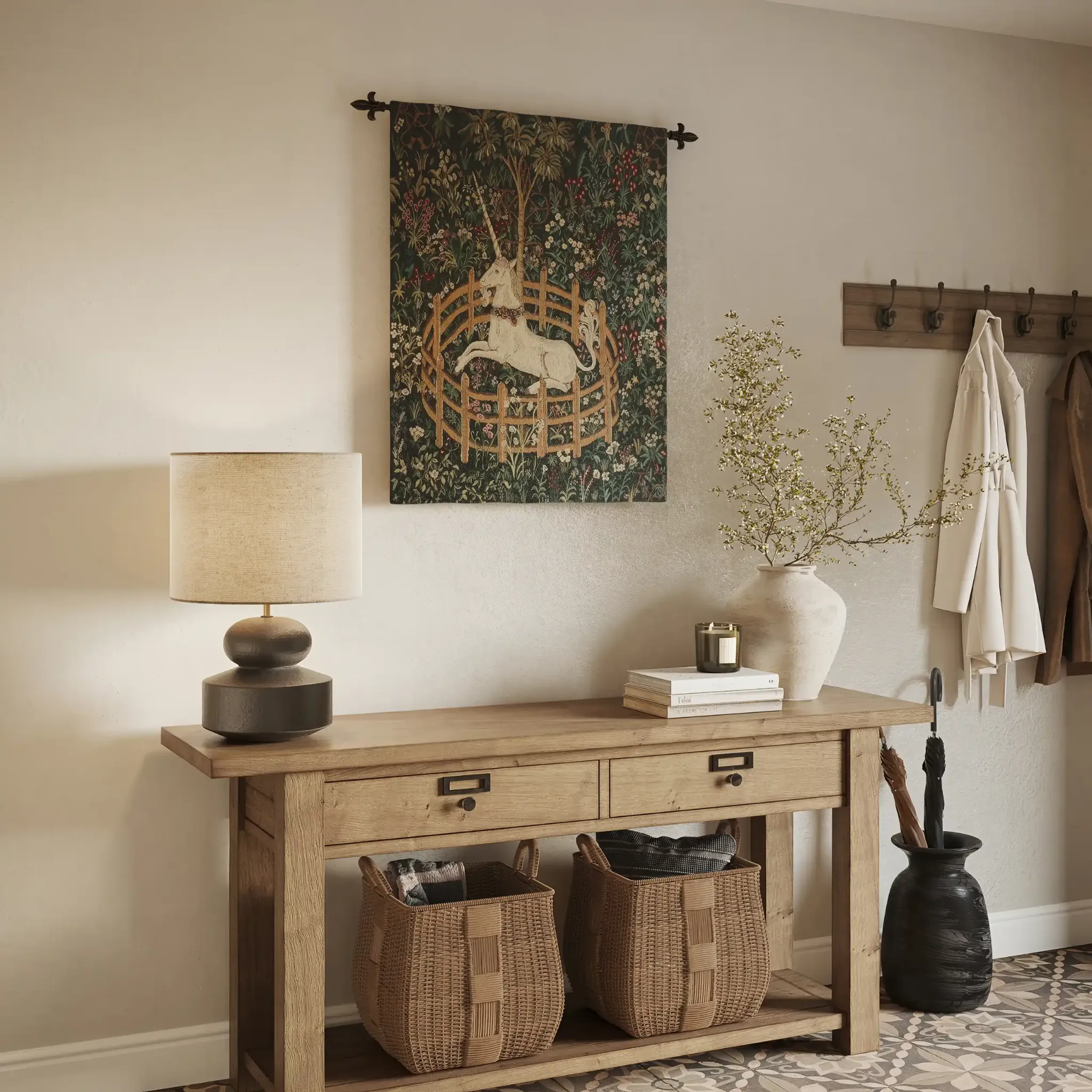
Medieval art is rich with symbolism, storytelling, and intricate craftsmanship, offering a glimpse into the beliefs and lifestyles of past civilizations. Among the most fascinating forms of this artistic expression is the medieval tapestry, which served not only as decoration but also as a narrative medium. These woven masterpieces often depicted scenes of mythology, religion, and daily life, reflecting the values and aspirations of their time. From castles to cathedrals, tapestries played a vital role in shaping interior spaces while conveying powerful visual messages that continue to captivate audiences even today.
The Historical Significance Of Tapestries
Tapestries held immense importance during the Middle Ages, functioning as both decorative art and practical insulation for stone walls. The medieval tapestry was often commissioned by nobility and royalty, symbolizing wealth, power, and cultural refinement.
Among the most iconic examples is the medieval unicorn tapestry, which represents themes of purity, love, and mysticism. These works were not merely decorative but also served as storytelling tools that communicated complex ideas to a largely illiterate population.
Symbolism Woven Into Every Thread
One of the defining characteristics of a medieval tapestry is its use of symbolism. Every color, figure, and motif carried meaning, often rooted in religious or cultural beliefs.
The medieval unicorn tapestry is a prime example, where the unicorn symbolizes innocence and spiritual grace. Such imagery allowed viewers to interpret deeper meanings beyond the surface, making each tapestry a layered and thought-provoking piece of art.
The Craftsmanship Behind Tapestry Making
Creating a medieval tapestry required exceptional skill and patience. Artisans used looms to weave intricate designs, often taking months or even years to complete a single piece.
In many cases, designs featuring the medieval unicorn tapestry required detailed planning and collaboration between artists and weavers. The use of high-quality materials such as wool and silk added to the richness and durability of these works.
Storytelling Through Visual Narratives
Tapestries were a powerful medium for storytelling, depicting historical events, legends, and religious narratives. A medieval tapestry often functioned like a visual book, conveying stories through carefully arranged scenes.
The medieval unicorn tapestry series, for instance, tells a symbolic story that has been interpreted in various ways over time. These visual narratives allowed viewers to engage with the artwork on both intellectual and emotional levels.
The Role Of Color And Composition
Color played a crucial role in the effectiveness of a medieval tapestry. Natural dyes were used to create vibrant hues that conveyed mood and meaning.
In the medieval unicorn tapestry, rich reds, deep blues, and lush greens are used to enhance the storytelling and highlight key elements. The composition of each piece was carefully planned to guide the viewer’s eye and emphasize important details.
Cultural And Religious Influences
The themes depicted in a medieval tapestry were heavily influenced by the cultural and religious context of the time. Many tapestries featured biblical scenes, saints, and allegorical figures.
The medieval unicorn tapestry also reflects these influences, blending mythology with spiritual symbolism. This combination created artworks that were both visually stunning and deeply meaningful.
Tapestries As Status And Identity Symbols
Owning a medieval tapestry was a sign of wealth and prestige. These pieces were often displayed in grand halls and private chambers to showcase the owner’s status.
The inclusion of designs like the medieval unicorn tapestry further elevated their significance, as such motifs were associated with nobility and refined taste. Tapestries thus became an important part of personal and cultural identity.
Enduring Legacy In Modern Design
The influence of the medieval tapestry continues to be seen in modern art and interior design. Contemporary interpretations often draw inspiration from traditional motifs and techniques.
The timeless appeal of the medieval unicorn tapestry ensures that these designs remain relevant, blending historical charm with modern aesthetics. Today, they are appreciated not only as historical artifacts but also as sources of artistic inspiration.
Conclusion
The medieval tapestry remains a remarkable testament to the artistic skill and symbolic depth of the Middle Ages. Each piece tells a story, reflecting the cultural, religious, and social values of its time while showcasing exceptional craftsmanship. Incorporating elements like a large tapestry into modern spaces allows these historical artworks to continue inspiring and enriching contemporary interiors with their timeless beauty and meaning.